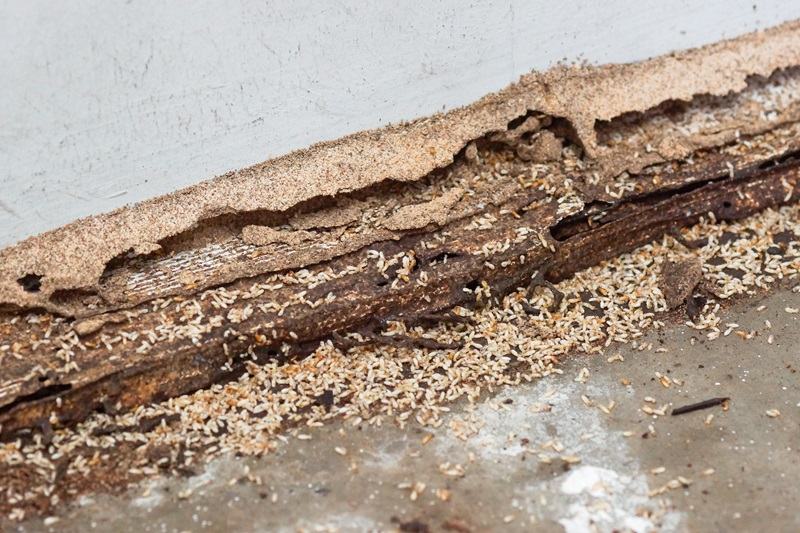
By August, termites have been working all summer in Arkansas. The ground is warm, moisture from spring rains is still trapped under crawl spaces, and the colonies that woke up in March have had four months to grow. This is when I find the most active termite damage of the year.
I'm not a pest control company. I don't treat termites. But on every home inspection, I'm looking for them, and I find evidence of activity often enough that homeowners need to know what to look for between inspections.
Most people think of swarmers, the winged termites that come out in spring. By August they're long gone. What's left is the workers, who never come above ground if they can help it. So the evidence you're looking for isn't the bug itself. It's the trail.
The two things I find most often:
I also look for frass, which is termite droppings, on window sills and around baseboards. Frass looks like coffee grounds or sawdust pellets. If you find it, you almost certainly have drywood termites, which are less common in Arkansas than subterranean termites but still show up.
Subterranean termites in Arkansas are nearly always coming from the soil. They get in through:
If your house is on a crawl space, that's where I find the most activity. Warm, dark, moist, full of wood. From a termite's perspective, it's a buffet.
Every couple of months, walk the foundation perimeter. Look for mud tubes on the brick or block. Check anywhere wood meets concrete. If you have a crawl space and you're willing to crawl in, look at the bottoms of the floor joists and the sill plate. That's where mud tubes show up first.
Inside the house, push on baseboards and door trim. Healthy wood is firm. Termite-damaged wood feels like cardboard.
If you find anything that looks like termite activity, don't try to handle it yourself. Spraying retail-store termiticide on a mud tube doesn't kill the colony. It just sends the workers somewhere you can't see them.
Call a licensed pest control company that does termite work, not just general extermination. Get two estimates if the damage is significant. Treatment options are bait stations, liquid soil treatments, or both, and the right answer depends on the home.
If you're in a real estate transaction, you'll need a termite letter from a licensed inspector. Most Arkansas mortgage lenders require it on rural and older homes.
Termites are a wood-destroying organism, and I document any evidence of activity I see during a home inspection. That's part of any thorough inspection in Arkansas. If I find activity, I'll tell you, and I'll point you to a licensed treatment company.
If you're buying a home in Conway, Little Rock, Benton, or anywhere in Central Arkansas this summer, this is the season to take a careful look. Better to find termites in August during an inspection than next March when the swarmers come out of your living room wall.
Are termites common in Central Arkansas? Yes. Subterranean termites are active across Faulkner, Pulaski, Saline, and surrounding counties. Most homes need a termite plan at some point.
Will a home inspection find termites? A home inspection documents visible signs of wood-destroying organisms. For an official termite letter, you'll also need a licensed pest control inspector.
What does termite damage look like? Mud tubes on foundations, hollow-sounding wood, paper-thin baseboards, and small piles of frass that look like coffee grounds.
Do home inspectors treat termites? No. I document any activity I find during the inspection. Treatment is handled by a licensed pest control company. Learn more about our home inspection services.
Call or text: 501-505-6805 Email: inspectorbjmoody@gmail.com
Move forward with confidence.
Residential • Commercial • Pool & Spa Inspections • Serving all of Arkansas